

The Empathy Machine

A couple of weeks back, my wife and I braved the cold and snow on a Sunday night to catch a rare, 35mm screening of the 1944 classic, The Curse of the Cat People. The film is the sequel to the classic horror film Cat People, and it’s the directorial debut of one of my favorite directors, Robert Wise.
The Curse of the Cat People was playing at the Music Box Theatre in the Lakeview neighborhood of Chicago. For those who know of the theatre, it’s one of those classic cinema palaces from nearly a century ago. Its main theater still has the gold embellishments, beautiful, red draping curtains, and painted ceiling that mimics the night sky.
For the decades I have been visiting, it has been one of those cultural icons that has introduced me to so many rare, sometimes forgotten, and hard-to-find films. More important than what’s playing on the silver screen is the sense of community the Music Box cultivates.
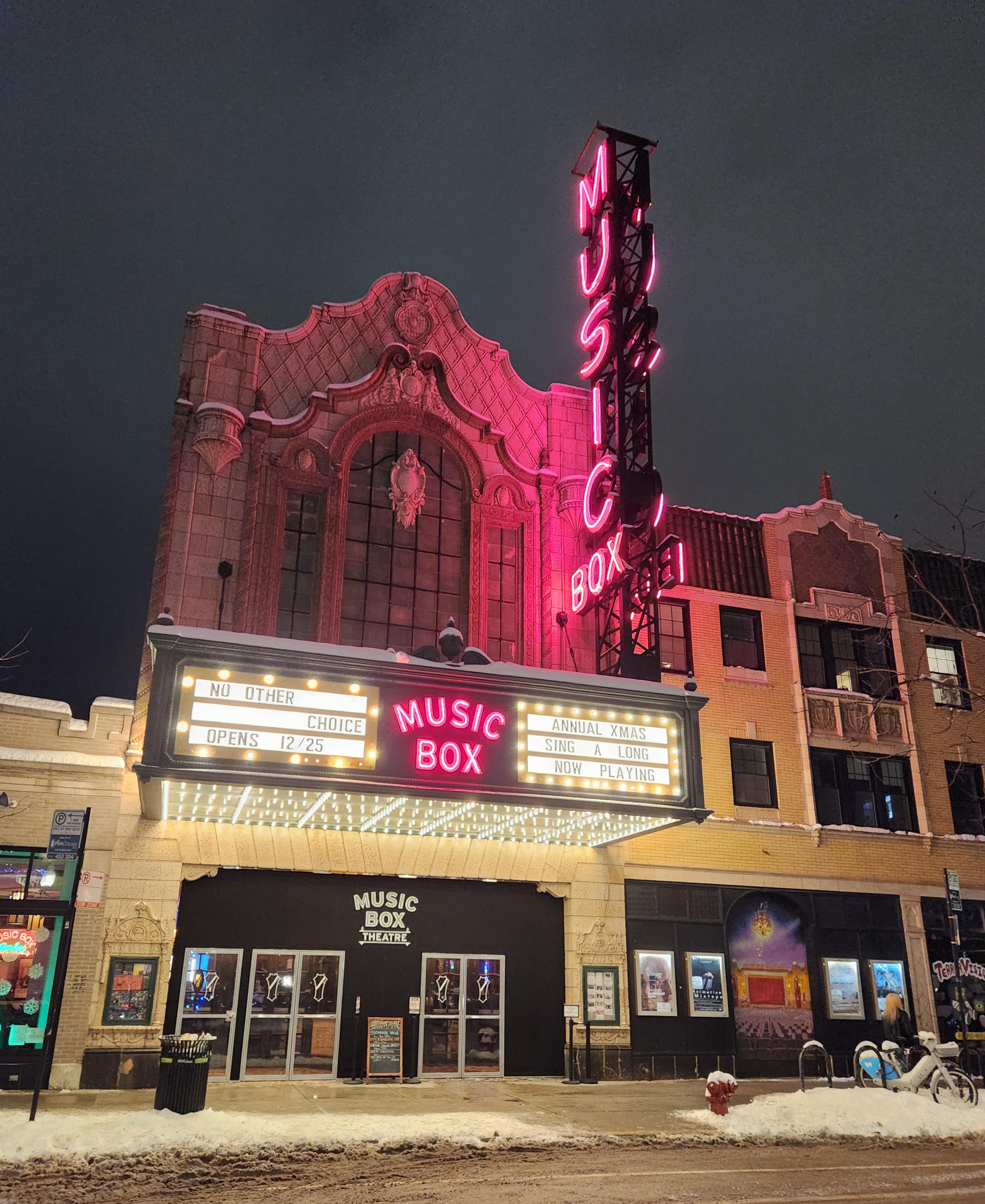
Our screening of The Curse of the Cat People overlapped with an annual showing of It’s a Wonderful Life. When my wife and I walked in to catch our screening, we navigated through a crowd of patrons in red and green sweaters. In one corner of the theater, a trio of Christmas carolers were wrapping up “Deck the Halls” and leading into “Let It Snow.” A perfectly decorated tree twinkled behind them, while employees poured cups of hot chocolate and mulled wine at the concession stand nearby.
In the theater where It’s a Wonderful Life was scheduled to screen, the theater’s organist played the pipes while a man dressed as Santa Claus conducted a seated audience through a set of holiday songs.
I thought of an old clip of a tearful David Lynch, director of so many classics, expressing his love and joy at James Stewart’s performance in the movie.
There was an infectious feeling in the air, carried on aromas of mulled wine and cocoa. It rode the notes of joyous song. It was warm; it felt like home; it was love.
Roger Ebert famously referred to the art of movies as “the empathy machine.” In his view, this powerful form of art could share expression and emotion and the human condition from one person to another, from creator to audience member, from someone of a different cultural, upbringing, or era to a person halfway across the globe or half a century later.
In many respects, all art is its own empathy machine. We can feel the passion behind a drumbeat or stare at a painting, finding ourselves lost in a subject’s expression.
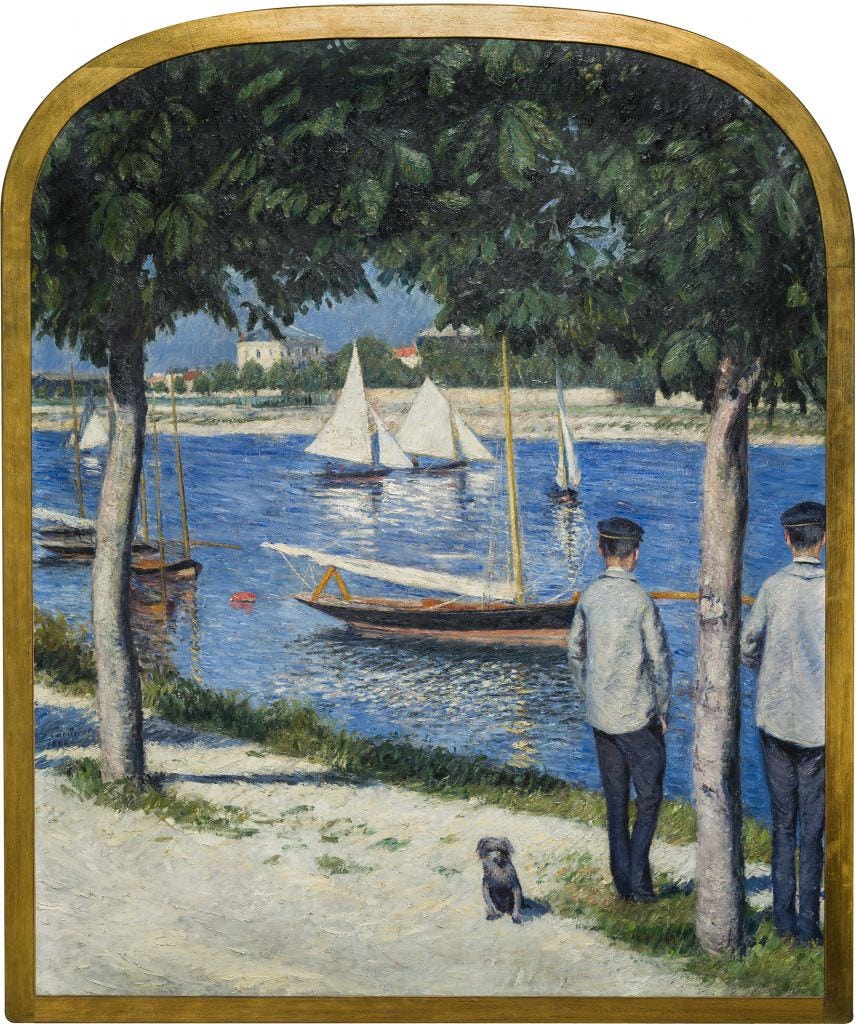
On a recent trip to the Art Institute of Chicago, I found myself wiping a tear away from my eye as I looked upon a painting from Gustave Caillebotte. It was of two boys, close in age, watching the ships from the water’s edge in “The Bank of Petit Gennevilliers and the Seine.” It reminded me of my younger brother and of childhood summers spent together. It reminded me of how much I miss those moments.
In one of my film classes, almost two decades ago, I remember the first time I watched The 400 Blows. At the time, I had no idea who Francois Truffaut was, nor of his cultural impact to French New Wave. But when that film ended, I felt a deep, personal connection to an artist I never met. It was as if, in that moment, he fully and completely understood how I felt all those years leading up to that moment. My childhood self felt seen and understood.
The Empathy Machine works the other way, as well. As I’ve sought to understand people of different backgrounds, religions, races, sexes, and identities, watching someone’s life and vulnerabilities play out on the screen helps me see them for the person they are — flawed, complicated, and yet so full of love.
I’m a big believer in, if there’s a roadblock in understanding someone, experience their life or art through their eyes. Books translated from a different language, paintings, films, songs sung in a tongue you can’t comprehend: These are gateways to the soul behind the eyes, to the person behind that barrier which separates and divides us.
At the end of the day, most of us want the same thing. We yearn for a community that accepts us. We want comfort from a friendly embrace and desire to both receive and give out acts of kindness. We want to experience the tingling warmth of love, especially on the coldest of days.
As the year comes to a close, revisit those classics that reinvigorate that sense of love and closeness to humanity. Share a screening with friends and family, gaze at a painting that’s touched your soul.
When the new year dawns on us, make a resolution to experience art from a person or culture completely foreign to you. If we’re ever to work toward a more kind, loving, and humane planet, it starts with us. We have the ability to create and share works of art that convey thoughts, feelings, and ideas. Let us use our empathy machines to forge a better tomorrow.
We’re all in this together,
Scott
P.S. If you like this newsletter and want to pay it forward, there are four ways to show your support.
Hit the like button, or leave a comment.
Buy a digital copy of MACHINE: A Cybernetic Fairytale on Itch.io or Amazon.
Forward this to a friend with an invitation to sign up: https://scottwaldyn.substack.com/about
Hit the ReStack button, and share with other Substack users.
P.P.S. Here are the latest happenings in my neck of the woods:
I have the first article in a new Phantom-focused educational series over at Chronicle Chamber.
No AI is ever used in the writing of Because We Can.